
Responsible AI Recruitment: 6 Practical Checks for Australian Hiring Teams
27 July 2026
Artificial intelligence can help recruiters organise applications, identify patterns and reduce repetitive administration. When it influences who progresses, however, speed should be matched by clear governance. Australia’s Guidance for AI Adoption, published on 5 May 2026, specifically uses AI shortlisting as an example where bias could reject qualified candidates at scale.
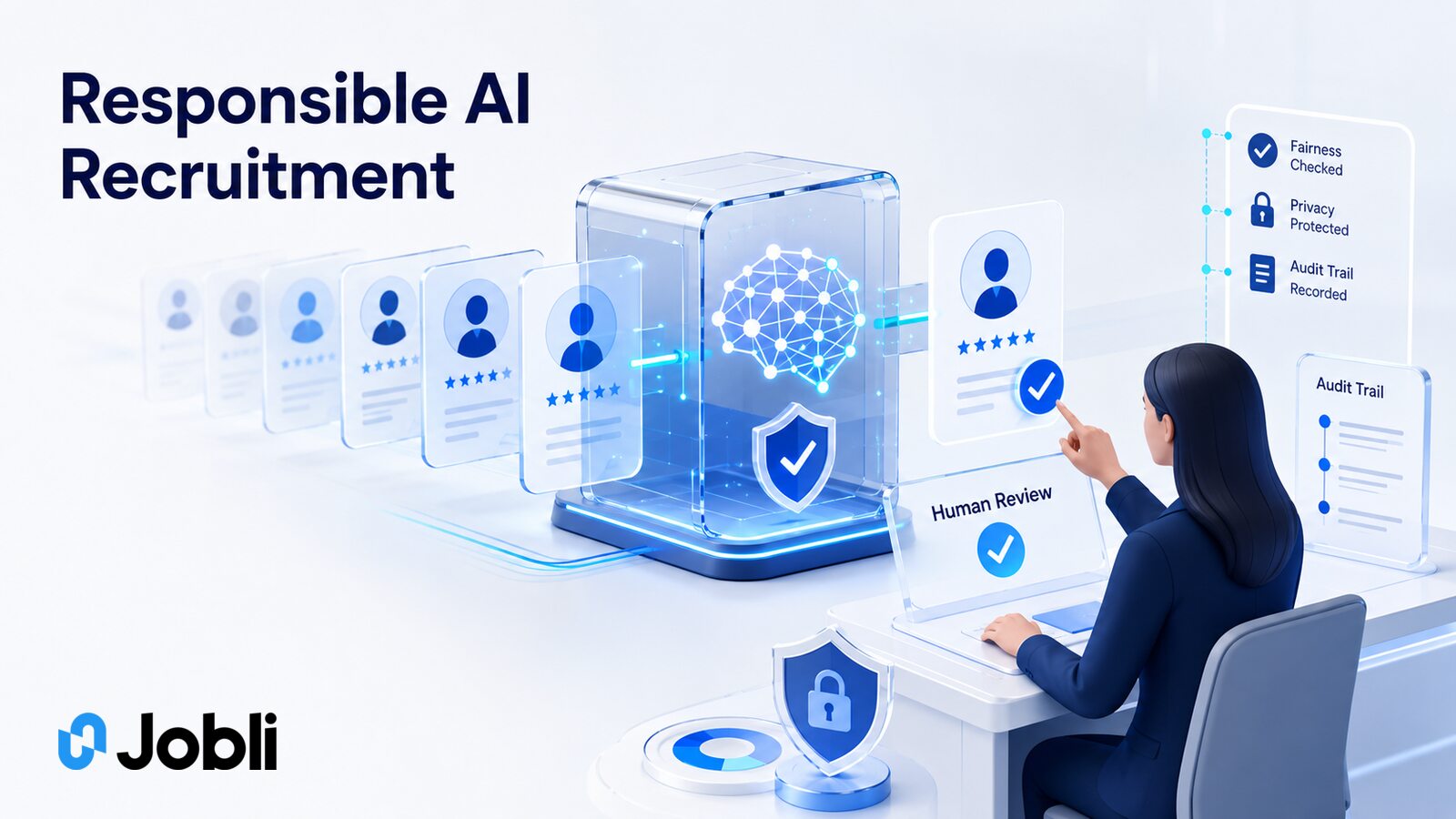
For agencies and internal talent teams, responsible AI recruitment begins before a tool goes live. The aim is not to avoid useful automation, but to apply it with defined accountability, privacy controls, testing and meaningful human oversight.
What responsible AI recruitment means
Responsible AI recruitment means understanding what a system does, what data it uses, where its limitations sit and who remains accountable for decisions. The Office of the Australian Information Commissioner advises organisations to assess whether commercial AI products are suitable for their intended use, consider privacy and security risks, and embed human oversight. Privacy obligations may apply to personal information entered into a system and personal information contained in its outputs.
Six checks before using AI in hiring
1. Define the decision and its owner
Document whether the tool assists with administration, recommends candidates, ranks applications or influences rejection. Assign a named person who can approve the use case, explain the process and intervene when concerns arise.
2. Review data and privacy
Identify what candidate information enters the system, who can access it, where it is stored and how long it is retained. Review privacy notices and avoid placing personal or sensitive candidate information into public AI tools without appropriate safeguards.
3. Test the intended use
Test the system against job-related criteria and realistic recruitment scenarios before deployment. Review incorrect inclusions and exclusions, not only overall accuracy. Supplier claims can inform due diligence, but teams should confirm performance within their own workflow.
4. Keep human oversight meaningful
A reviewer should understand the system’s purpose and limitations, inspect the evidence and be able to override an output. Human approval should be a genuine control rather than a routine click. This complements the workflow principles in Jobli’s guide to reducing time to hire: https://www.jobli.io/news/reduce-time-to-hire.
5. Explain the process and allow review
Candidates should receive clear information where AI materially affects their experience or progression. Provide an accessible contact channel and a practical way to request clarification or human reconsideration. The Australian Human Rights Commission’s recruitment checklist emphasises fairness, transparency, accountability and the ability to challenge outcomes.
6. Monitor after deployment
Keep records of the tool’s purpose, responsible owner, testing, changes and incidents. Monitor outcomes for unexpected patterns and reassess the system when roles, data, models or workflows change. Responsible deployment is an ongoing process rather than a one-off approval.
Questions to ask an AI recruitment supplier
Ask what data supports the system, which hiring uses it has been tested for, what limitations are known and how outputs can be explained. Confirm access, retention, security and update arrangements. Also check whether your team can export audit records, monitor outcomes and retain control when the tool is unavailable.
Balance efficiency with accountability
Australian workplace protections apply to prospective employees as well as existing employees, including protection from adverse action for discriminatory reasons. Using an automated system does not remove an organisation’s responsibility for its recruitment process. A practical approach is to automate suitable administrative work while keeping accountable people involved in decisions that affect candidates.
Jobli brings candidate records, communication, tasks, automation and reporting into one connected recruitment platform. To explore how Jobli can streamline hiring workflows while supporting clear human oversight, request a tailored demonstration at https://www.jobli.io/book-demo.
Frequently asked questions
Should AI make final hiring decisions?
For consequential decisions, maintaining meaningful human review is a prudent governance measure. The reviewer should understand the evidence, be able to challenge the output and remain accountable for the decision.
How often should recruitment AI be reviewed?
Review it before deployment, after material changes and at regular intervals based on risk. Reassess sooner if outcomes shift, candidates raise concerns or the provider changes the model or data.